- Who We Are
- Issues
-
Health and Hygiene
Daily life threatens health
-
Medical Care
Lives of young children that could be saved are lost
-
Nutrition
Unable to properly intake nutrition, the source of health
-
Agriculture
Unable to secure essential food for survival
-
Education
Education disparity is widening even in developing countries.
-
Industrial Development
There are people and regions that cannot escape from weak positions
-
- What We Do
- Get Involved
-
Volunteering
Want to utilize my time and skills
-
- Latest News

-
First Time Here?
Quick Guide to FIDR
- About Us
- Our Foundation
- Publications
-
Issues We Face
- Health and Hygiene
- Medical Care
- Nutrition
- Agriculture
- Education
- Industrial Development
-
What We Do
- International Cooperation for Social Development
- Emergency Response and Rehabilitation Assistance
- Public Relations and Education
-
How You Can Help
- Volunteer



Emergency Assistance: Providing Hope to Cambodian Displaced People
Due to the military conflict along the Cambodia-Thailand border in May 2025, moreover, the severe air strikes in December, the lives of more than 650,000 Cambodians have been affected. This is one of the worst displacement situations since 1993. The FIDR team has been actively working to respond to this crisis.
According to the Ministry of Interior's announcement on May 17, 2026, more than 32,000 displaced people are still unable to return home because their houses are located in the “Red Zone” — a combat area at the border where military control is enforced and residents are restricted. It is considered a high-risk zone due to the likelihood of military conflict, heavy artillery, and remaining unexploded bombs. It is too dangerous for people to return until safety is officially guaranteed.
Voices of Evacuees
Following a series of our emergency relief operations since December 2025, FIDR visited Srei Snam District, Siem Reap Province on February 10th, 2026. We stayed close to displaced people in the camp and heard their voices as follows.
-
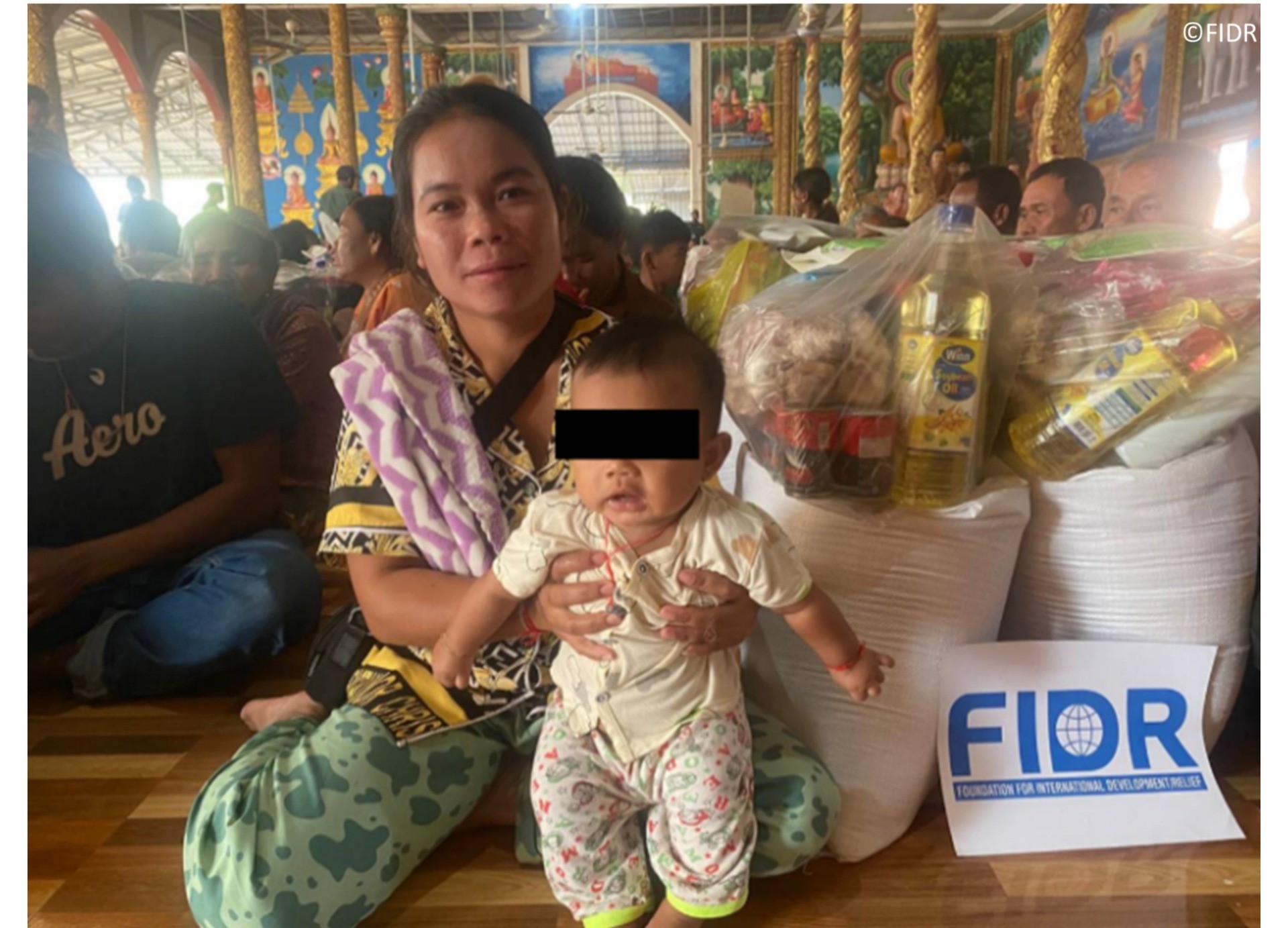
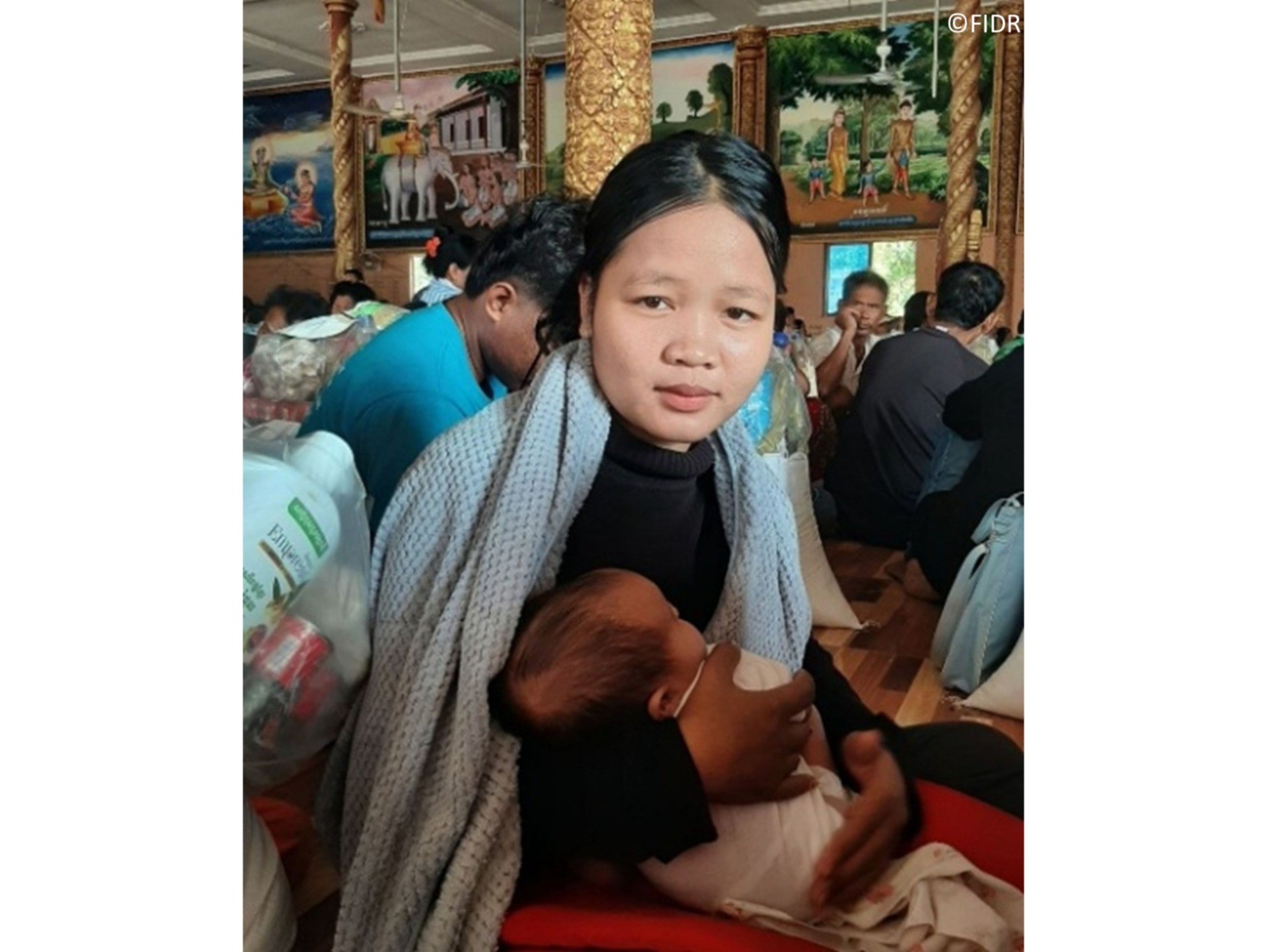
Food Insecurity severely impacts on child nutrition
Ms. Saleot and Ms. Krot, two mothers explained, “We are worried about our children’s health. We can eat only dried fish because it is impossible to buy fresh meats and vegetables. we don’t have enough money.”
People with disabilities struggle to live in the camp
One 47-year-old man doesn’t have a family and has had a disability since childhood. Also, he has a chronic illness.
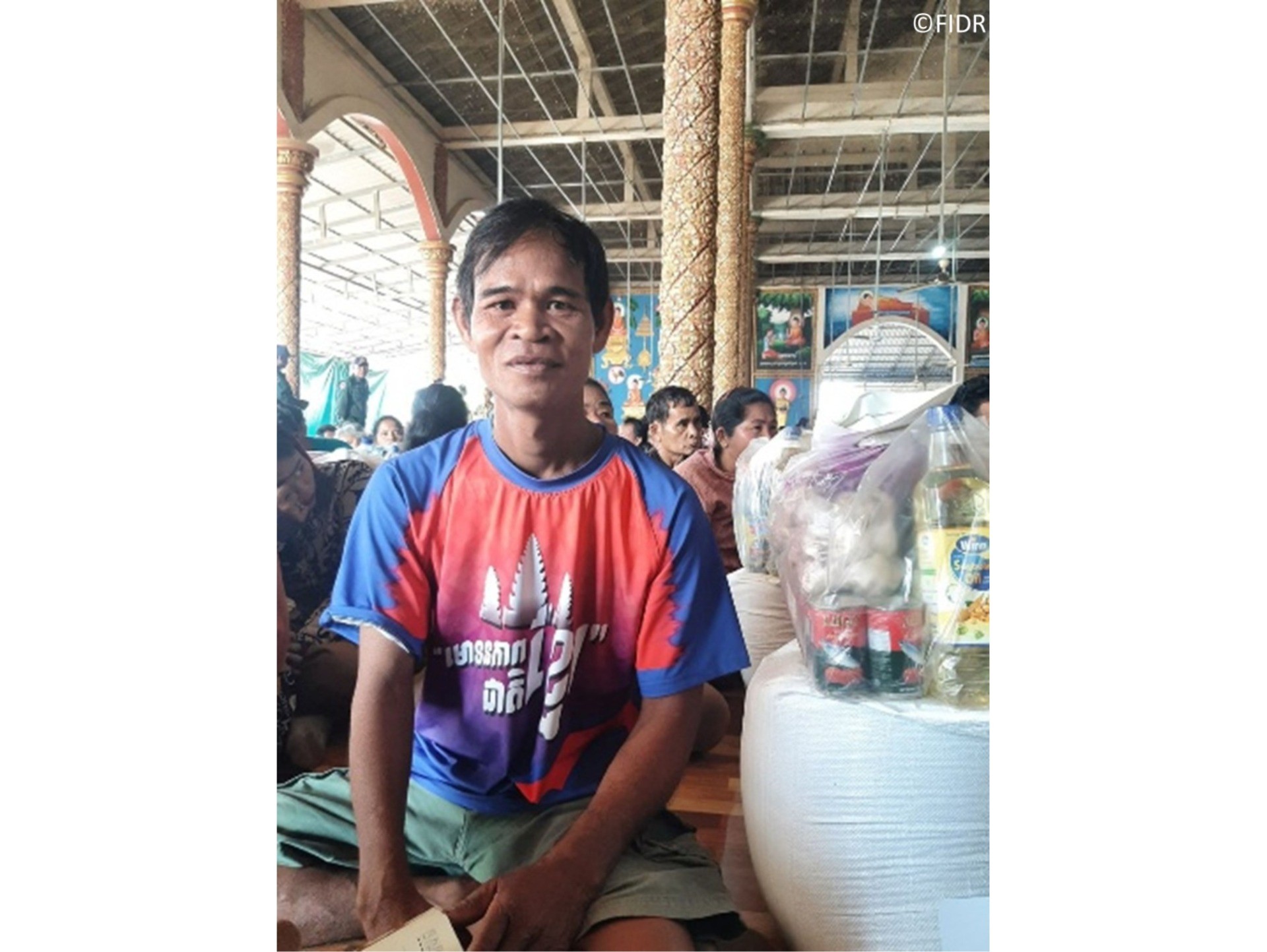
“I have to spend money to buy medicine for my disease every day. Before the conflict happened, I earned incomes by fishery, and there were neighbors who cared about me. But now, I stay alone in this camp.
-
Hardship Living with Many Family Members
Ms. Chhout, a 65-year-old woman, lives with 9 family members in a tent.

“The temperature in the tent is very high. Not only due to its plastic material of the tent, but living with 9 people in a single tent makes me feel very hot. My family needs much money to buy foods and necessary materials for our daily life,” she explained.
-
Mothers survive with children, but stay without husbands
Most of people in the camp are female, children, and elderly, while many of men have left to work in urban areas to support their families. As a result, mothers with young children have to manage their daily lives on their own.
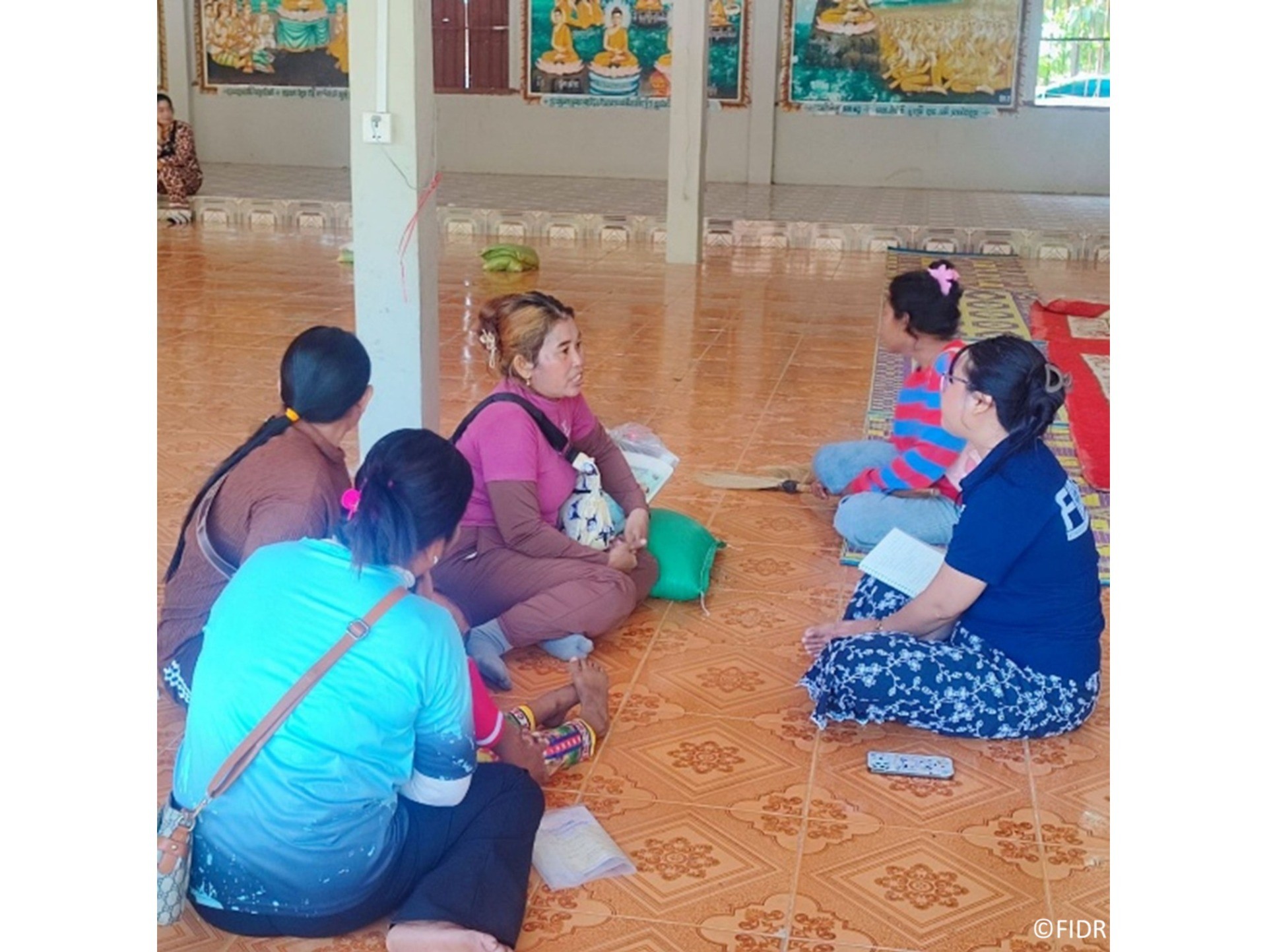
Ms. Chantoeut, a female evacuee staying in the camp with her three children, shared her anxiety.
"I really want to go back to my home soon. I want everything to be normal. If I can sell groceries at home like before, my husband doesn't have to go to Phnom Penh for a job, and my family can live together," she said while crying hard.
Ms. Savin, another woman with 3 children, shared her experience of job seeking in Phnom Penh.
“Earlier, my husband and I left our children with their grandmother in this camp and went to Phnom Penh to find work. But, we could not find any jobs, since we don't have relatives or friends who can support us in Phnom Penh. When I asked for a job at factories, they told me that I was too old without any skills.” After seeking job for nearly a month there, her savings were almost gone, and she decided to return to this camp.
FIDR’s Response
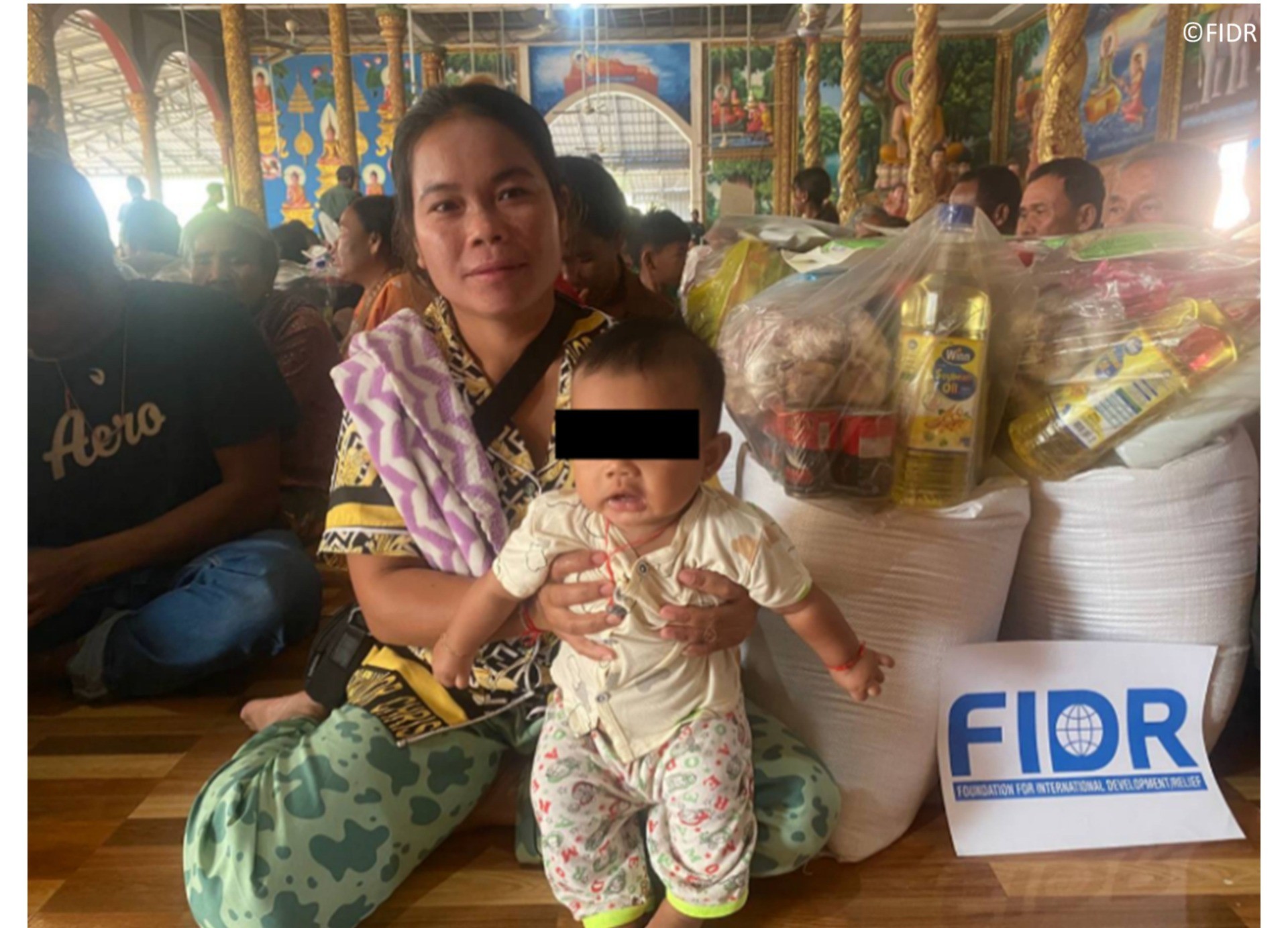
Based on our observations, problems in the camps are very serious, such as widespread malnutrition, unhealthy living environments, and rising costs of commodities while people have lost their means of earning incomes. Thus, FIDR have delivered foods and essentials for people as follows;
-
Preliminary batch in December 2025
50 households in Banteay Meanchey and Battambang provinces (1,000 USD)
-
1st batch in January 2026
15 households in Kampong Leng district, Kampong Chhnang province (3,078.50 USD, including fishing nets to generate income)
-
2nd batch in January 2026
227 households in Battambang and Pursat provinces (6,745.26 USD, including school materials for students)
-
3rd batch in February 2026
900 households in Srei Snom District, Siem Reap province (29,783.30 USD, including water systems, tents, and firewood for cooking)
Currently, the planning for next operations is ongoing.
Call for Donation
These stories are just one part of many more people who need help. Houses and schools are destroyed, and living in camps will last for a long time.
All your donations, even small, can give them hope for tomorrow.
Please join us and donate through FIDR to continue this work: https://www.fidr.or.jp/news/20251225.html
Other Activity Reports
-
Nutrition Education and Promotion Project
2026.06.17
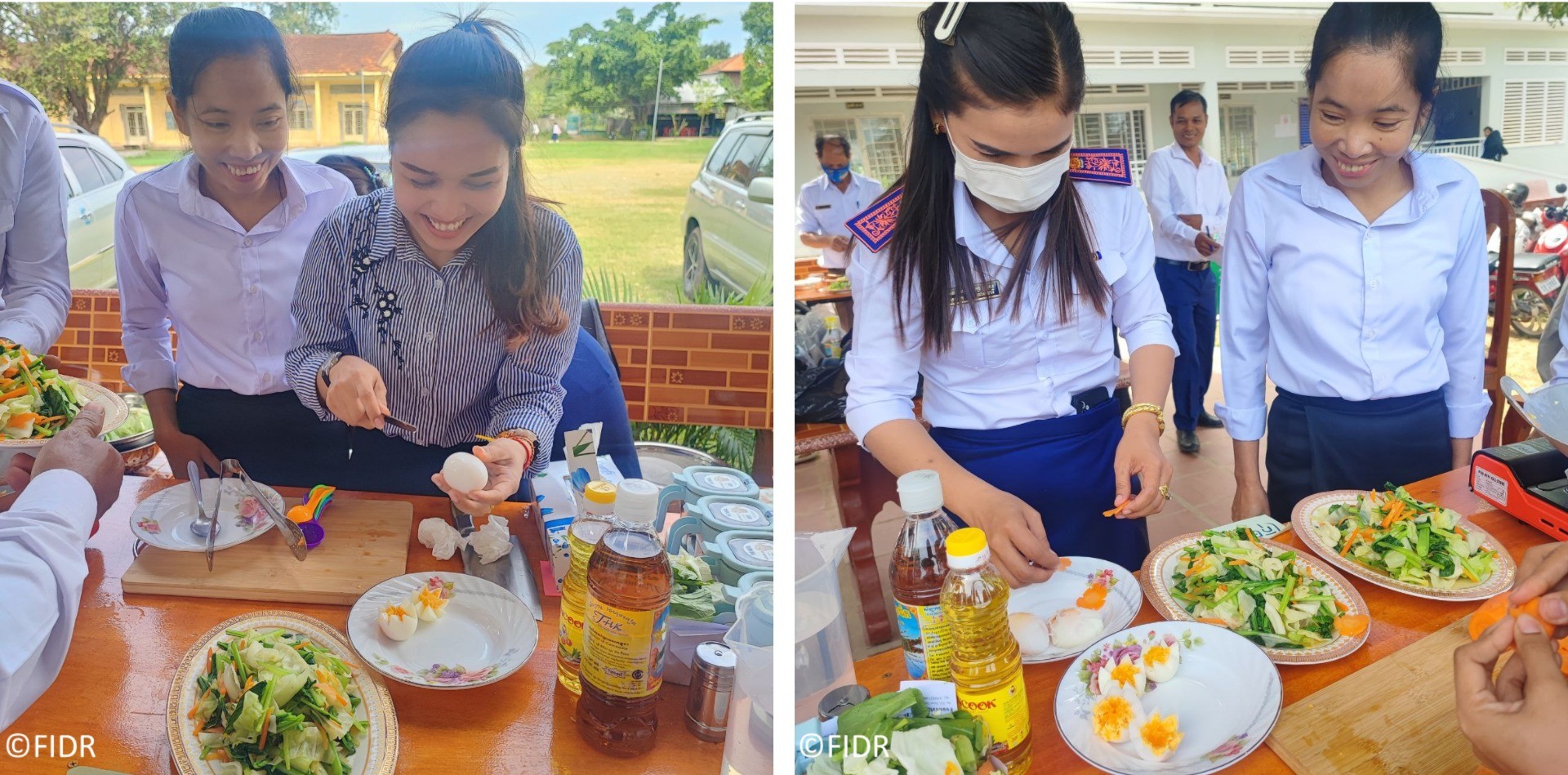
Cooking Classes Begin at the M...
Cambodia Health anbd Hygiene Nutrition Education International Cooperation for Social Development -
Emergency Relief for Displaced People in Cambodia
2026.06.10
Emergency Assistance: Providin...
Cambodia Emergency Response and Rehabilitation Assistance
DONATION
Your generous donation now will have impacts
on children and communities in our fields.