- Who We Are
- Issues
-
Health and Hygiene
Daily life threatens health
-
Medical Care
Lives of young children that could be saved are lost
-
Nutrition
Unable to properly intake nutrition, the source of health
-
Agriculture
Unable to secure essential food for survival
-
Education
Education disparity is widening even in developing countries.
-
Industrial Development
There are people and regions that cannot escape from weak positions
-
- What We Do
- Get Involved
-
Volunteering
Want to utilize my time and skills
-
- Latest News

-

First Time Here?
Quick Guide to FIDR
- About Us
- Our Foundation
- Publications
-
Issues We Face
- Health and Hygiene
- Medical Care
- Nutrition
- Agriculture
- Education
- Industrial Development
-
What We Do
- International Cooperation for Social Development
- Emergency Response and Rehabilitation Assistance
- Public Relations and Education
-

How You Can Help
- Volunteer



Emergency Relief for Displaced People in Cambodia
Background
The military clashes that broke out along the Cambodia–Thailand border in May 2025 developed into a conflict involving civilians in July. A peace agreement was signed in October, bringing some hope that the situation would calm down.
However, on December 7, rocket attacks and airstrikes by Thai forces into Cambodian territory began again. The damage has spread across seven provinces bordering Thailand, reaching areas more than 50 km from the border. Civilians have died and been injured, homes, farmland, and other assets have been lost, and markets, bridges, schools, and other facilities have been destroyed.
The number of people who had left their homes and were staying in evacuation camps reached up to 650,000 at one point.* This has become the worst situation in Cambodia since the end of the civil war in 1993.
*According to an announcement by the National Committee for Disaster Management (NCDM).
In December, during FIDR’s initial emergency response, we conducted a field assessment and found that displaced people were facing extremely difficult conditions.
- There are gaps between evacuation shelters, depending on their size and location. Some shelters receive supplies more easily, while others are harder to reach.
- Many people have lost their jobs, farmland, and livestock, leaving them without a way to earn a living. At the same time, they need to buy daily necessities, which has increased their financial burden.
- As displacement continues, people are facing worsening nutrition and health conditions, interruption or delays in education, and serious mental stress.
- There is also concern that domestic support campaigns may gradually decline.
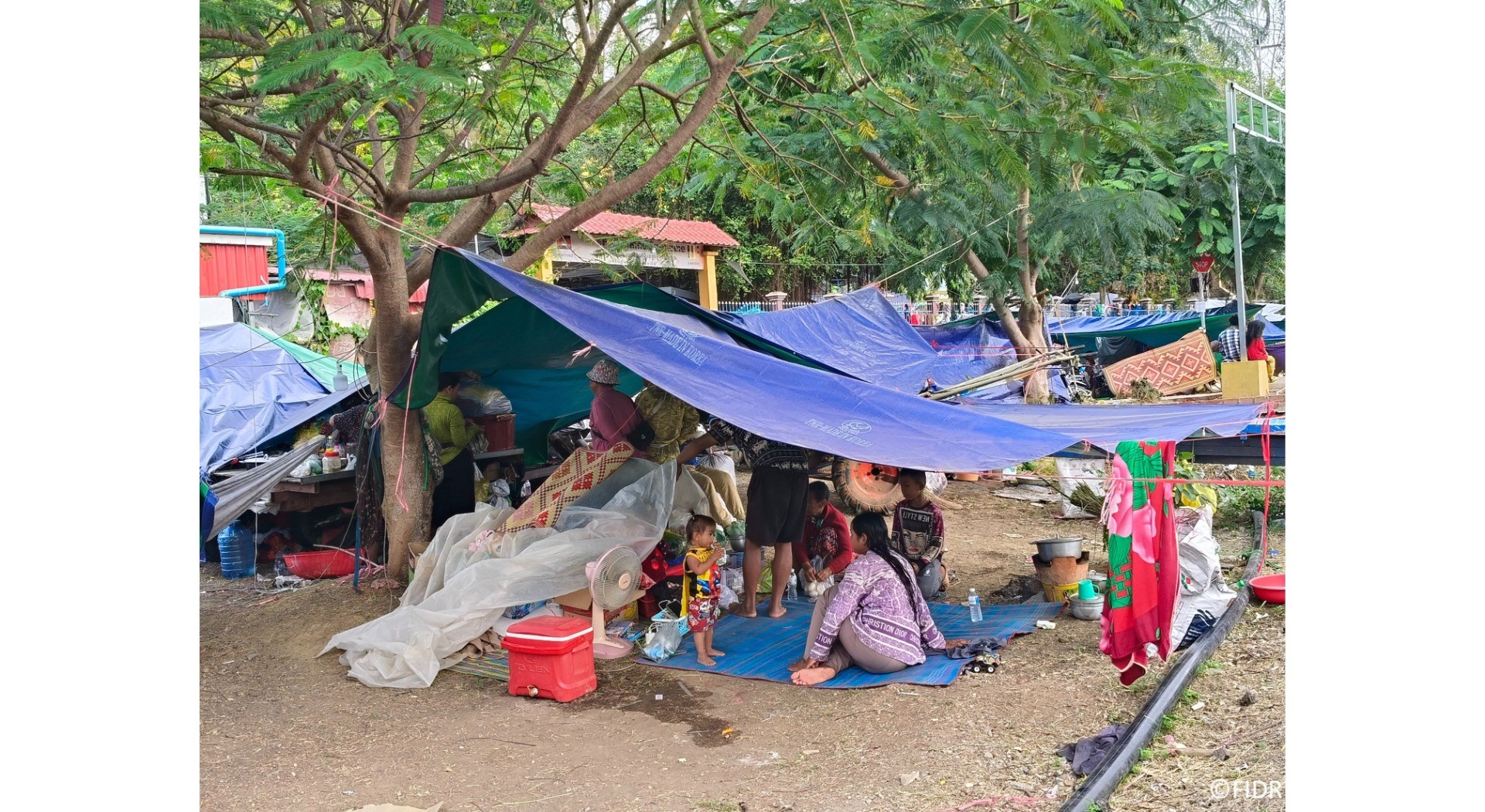
Displaced people are living under blue sheets provided as temporary shelter.
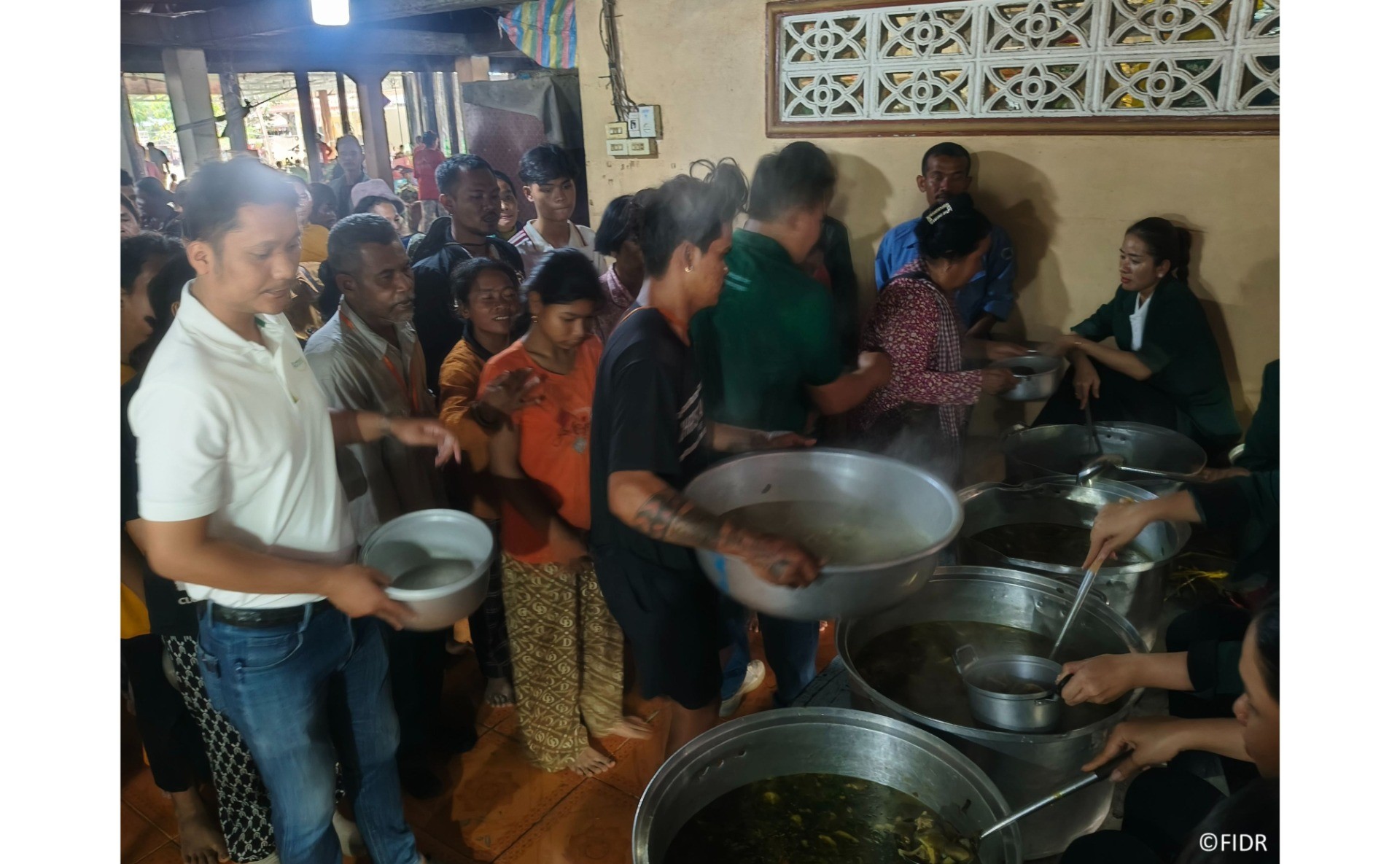
People line up to receive food distribution.
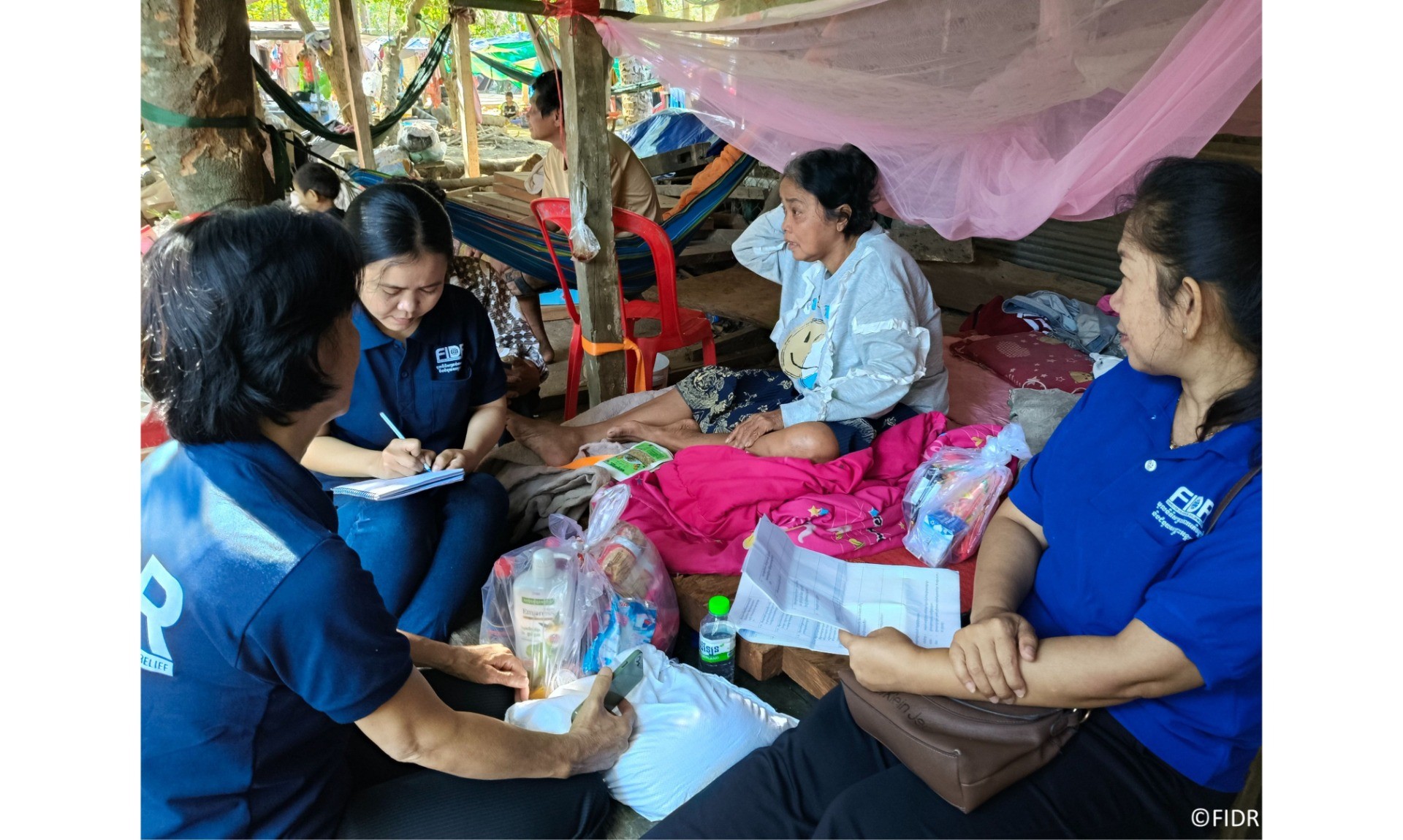
FIDR staff conduct interviews with displaced people.
To provide effective emergency support to difficult-to-reach areas and to respond to new needs arising as displacement continues, FIDR has continued its assessments and has been providing support since January.
Support Provided
Initial Assessment and Distribution (December 17–19)
|
Target Area |
Beneficiaries |
Support Provided |
|
• Evacuation centers in Banteay Meanchey Province: 2 sites |
50 households |
• Interviews with local authorities and displaced people • Distribution of canned food, seasonings, dried noodles, soap, shampoo, and clothing |

First Distribution
In Kampong Leng District, Kampong Chhnang Province, where FIDR implements a livelihood improvement project, displaced people came from border areas to stay with their relatives, even though the district is far from the border. At the highest point, 145 households, or 464 people, were staying there. With support from the local authorities, many households were able to stay in temporary shelters and later return home. However, people from areas designated as red zones due to the risk of unexploded ordnance and the possibility of renewed fighting have not been allowed by the authorities to return. As a result, their displacement has become prolonged.
During about one month, the displaced families received relief supplies from the authorities only once. Many of those who still remain in the area are now facing shortages of food and daily necessities as their displacement continues.
As FIDR has been working closely in Kampong Leng District for many years, the local authorities requested support. In response, FIDR decided to provide emergency assistance.
|
Target Area |
Beneficiaries |
Support Provided |
|
All displaced households staying in Kampong Leng District, Kampong Chhnang Province |
15 households / 47 people |
• Staple foods and other food items, including rice, dried fish, seasonings, vegetables, powdered milk, and locally produced furikake developed through FIDR’s project • Hygiene items, including soap, detergent, toothpaste, sanitary pads, and diapers • Livelihood support, including fishing nets |
Second Distribution (January 28–29)
FIDR also delivered support to areas that are not directly covered by our projects. This included students affected by the conflict at schools that have a collaborative relationship with FIDR, as well as communities that FIDR had visited during project study trips.
Target Areas
• Battambang Province: 127 affected households with students enrolled in schools related to the Nutrition Education and Promotion Project
• Pursat Province: 100 households in two small evacuation camps, where government supply distribution had been delayed
|
Beneficiaries |
Support Provided |
|
227 households |
• Food items, including rice, canned food, and seasonings • Hygiene items, including soap and detergent • Stationery |
Third Distribution (February 10)
In Siem Reap Province, where Angkor Wat is located, FIDR visited evacuation shelters in areas far from the provincial center to conduct a needs assessment. The assessment confirmed that support would be useful, and each shelter was facing different challenges. For example, some shelters had ponds but could not use the water effectively. In other shelters, the cost of buying firewood for cooking was too high for the shelter management budget to cover for everyone. In response to these specific needs, FIDR prepared a support plan.
Target Area
Siem Reap Province: 900 households in three small and remote evacuation camps, where government supply distribution had been delayed
|
Beneficiaries |
Support Provided |
|
900 households |
• Food items, including rice, canned food, and seasonings • Hygiene items, including soap and detergent • Water supply systems • Firewood • Tents |
Follow-up Survey (May 18–20)
As of May 17, 2026, while the majority of displaced people had been able to return home, approximately 32,000 people were still living in evacuation. To understand the needs arising from prolonged displacement and organize further operations plan, a survey was conducted at a temporary housing site in Banteay Meanchey Province, which was established by the local authority and accommodates approximately 3,000 households. At the same time, we visited two evacuation camps in Pursat Province.
|
Target Areas |
Support Provided |
|
• Temporary housing site in Banteay Meanchey Province |
• Interview with local authorities and displaced people • Locally produced furikake made through the project |

FIDR will continue to report on the situation of displaced people and the progress of our activities. Further support plans are now being prepared. We sincerely ask for your continued support.
Donate here: https://www.fidr.or.jp/english/news/20251226.html
Activity Report
Under Construction
DONATION
Your generous donation now will have impacts
on children and communities in our fields.